|
|
|
|
|
|
Establishment
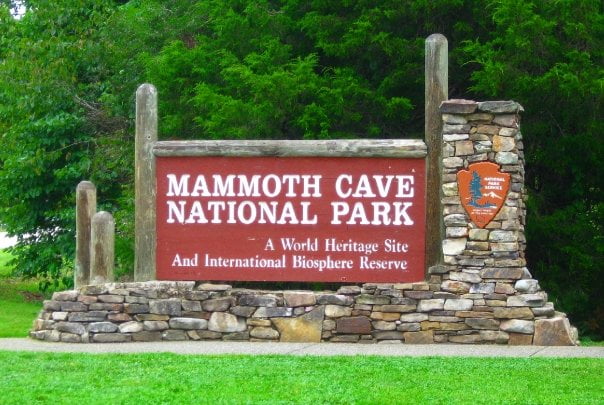
Mammoth Cave National Park was authorized as a national park in 1926 and was fully established 01 July 1941. It was established to preserve the cave system, the scenic river valleys of the Green and Nolin rivers, and a section of the hilly country of south central Kentucky. This is the longest recorded cave system in the world, with more than 348 miles explored and mapped. Mammoth Cave was designated as a World Heritage Site in 1981, and as an International Biosphere Reserve in 1990.
Size and Visitation
Mammoth Cave National Park has 52,830 acres.
Mammoth Cave National Park is opened year round with the highest visitation in June, July, and August and the lowest in January. Mammoth Cave National Park is open every day except Christmas Day.
Mammoth Ecosystem Linked by Water
Beneath the sandstone-capped ridges of Mammoth Cave National Park lies the most extensive cave system on Earth. After 4,000 years of intermittent exploration, the full extent of this water- formed labyrinth remains unknown. With more than 350 miles of surveyed passageways, Mammoth Cave is at least 3 times longer than any cave known. How long might it be? Geologists estimate that there could be as many as 600 miles of yet undiscovered passageways.
This vast cave system holds the world's most diverse cave ecosystem. Approximately 130 forms of life can be found in Mammoth Cave. Most are quite small. Some use the cave as only as a haven, while others are such specialized cave dwellers that they can live nowhere else. All are dependent on energy from the surface. Life in the cave is not separate from the rest of the natural communities found in Mammoth Cave National Park. It is an extension of the larger biological whole, whose diversity and abundance are preserved in this place. To tour the cave and not explore the park's surface trails and waterways is to gain but half of the total picture.
At least 10 miles of Mammoth Cave were explored by aboriginal peoples 4,000 years ago. Archeological evidence indicates that these early dwellers collected crystals and other salts found in the cave. Exploration of the cave ceased some 2,000 years ago and did not begin again until the rediscovery of the cave in 1798.
Mammoth Cave lies at the very beginning of American Tourism. As an attraction, the cave predates all national parks. People started visiting it as Flatt's Cave in 1810, and it became nationally known in 1816. Along with the early scenic national parks, Mammoth Cave eventually helped define our national identity in the 19th century, when our Nation desperately sought to dignify its industrial and military might. We seemed to lack the ancient places and cultural antiquities that Europe boasted, so we located our national identity in wonders of nature. Big was beautiful: Mammoth Cave, Grand Canyon, Giant Sequoia. These superlatives still live up to what Ralph Waldo Emerson once called "the brag" about them.
Mammoth Cave was authorized as a national park in 1926 and was fully established in 1941. At that time just 40 miles of passageway had been mapped. As surveying techniques improved, great strides were made in describing and understanding the overwhelming extent of the cave system. Several caves in the park were shown to be connected, and today the cave system is known to extend well beyond the national park boundary. The park was named a World Heritage Site in 1981 and became the core area of an International Biosphere Reserve in 1990. With its 53,000 surface acres and underlying cave ecosystem, Mammoth Cave National Park is recognized as an international treasure.
National park status and international recognition, however, are no guarantee for the continued protection and integrity of the natural systems of Mammoth Cave National Park. The park does not exist as a self-contained system. Research continues to demonstrate that cave and resident ecosystems are components of regional groundwater basins within the much larger Green River Basin. Groundwater inputs originate far beyond the park boundary, and under high-water conditions water quality is seriously degraded. Similarly, air quality studies have detected ozone at concentrations capable of damaging vegetation. If these world-class cave, forests, and riverine ecosystems are to be preserved for future generations, we must work together to protect the region's air and watersheds.
Geology
Beneath the surface of south central Kentucky lies a world that is virtually unparalleled. It is a labyrinth characterized by mile upon mile of dark, seemingly endless passageways. The geological process resulting in this world that we refer to as Mammoth Cave began hundreds of millions of years ago and continues today.
The Ancient World
350 million years ago was a very different time than today. The North American continent was located much further south; at that time Kentucky was about 10 degrees south of the equator, and a shallow sea covered most of the southeastern United States. The warm waters supported a dense population of tiny organisms whose shells were made of calcium carbonate (CaCO3). As these creatures died, their shells accumulated by the billions on the floor of the ancient sea. In addition, calcium carbonate precipitated from the water itself. The build-up of material continued during the next 70 million years until some seven hundred feet of limestone and shale was deposited. Late in the deposition of the limestone, about fifty to sixty feet of sandstone was deposited over much of the area by a large river system that emptied into the sea from the north.
About 280 million years ago, the sea level started to drop and the continent began to rise, exposing layers of limestone and sandstone. The stage was set for the formation of the Mammoth Cave. Forces at work beneath the earth's crust caused it to slowly rise, buckle and twist, causing tiny cracks between and across layers of limestone and sandstone. At the same time river systems as we know them today slowly developed. By about three million years ago a sandstone-capped plateau stood above the Green River, and a low, almost flat limestone plain extended southeast of what is now Interstate 65.
A Cave Gets Started
Rain water, acidified by carbon dioxide in the soil, seeped downward through millions of tiny cracks and crevices in the limestone layers. This weak carbonic acid (the same acid as in soda pop) dissolved a network of tiny microcaverns along the cracks. As the land continued slowly rising, the Green River eroded its channel deeper. The water in the network of microcaverns drained through the limestone under the plateau toward the river. Just as rivulets converged into streams above ground, water flow paths through the limestone also converged into incrementally larger flow paths.
As rainwater continued to enter the system and more limestone was dissolved, the microcaverns enlarged. Because the major drains carried the most water, they enlarged the most. Caves were forming. As the Green River cut deeper, the water table continued dropping to the same base level as the Green River. New underground drains formed at levels lower than the older ones, and the older channels emptied. Thus the oldest cave passages are the closest to the surface, and the youngest horizontal passages are the deepest underground. At the present water table, cave passages are still being formed.
Surface Clues
As you approach the vicinity of Mammoth Cave, several clues suggest the existence of caves. Road-cuts along highways have vertical exposures of layered grayish rock, often broken into irregular blocks at the top where erosion has widened vertical cracks across layers. Between the layers you may see the tiny openings in the limestone that are the first stage in the formation of a cave.
The landscape along the highway also has special characteristics. You will not see surface streams. Instead, you will see myriads of crater-like depressions called "sinkholes." These sinkholes are places where run-off may quickly enter the limestone aquifer. Cave drains carry the dissolved limestone away, and the surface soil settles, creating the bowl-shaped depression. If the sinkholes drains become plugged with soil, then the water cannot drain underground and a pond forms. Occasionally the drain becomes unplugged and a pond as large as several acres will disappear overnight.
This kind of landscape is called karst topography. It is found along and to the southeast of Interstate 65 near Mammoth Cave National Park and referred to as the Sinkhole plain. At its southeast edge surface streams sink underground joining the drainage of thousands of sinkholes. Continuing northwest they become the underground rivers of Mammoth Cave.
Driving northwest from Cave City or Park City, you start to climb a line of bluffs rising some three hundred feet above the sinkhole plain. These bluffs are the Chester Escarpment -- the border between the unprotected limestone of the Sinkhole Plain and the Mammoth Cave Plateau.
Beyond the top of the escarpment the plateau is divided into broad, flat sandstone-capped ridges separated by steep, limestone-floored valleys with many sinkholes. Very little water is able to penetrate the sandstone caprock, so the limestone below is protected from erosion. Most of the early discoveries in Mammoth Cave were beneath these ridges and valleys, and all the entrances are in the valleys.
Mammoth Cave - The Longest Cave
A unique combination of circumstances has made Mammoth Cave the longest cave in the world, with more than three hundred and thirty five miles of mapped passages. First, the karst setting has a large area for potential cave formation. The upstream headwaters of Mammoth Cave are out under the sinkhole plain. Most of the passages large enough for people to enter are under the escarpment, the plateau, and the flat-topped ridges with their intervening valleys. Springs along the Green River are the downstream outlets of ground rivers such as Echo and Roaring Rivers.
Second, the Green River valley has deepened slowly due to many interruptions during the ice ages (Pleistocene). As a result, major passages were formed and Mammoth Cave contains multiple levels.
Third, the limestone is made up of many different layers with different characteristics; therefore as the underground water sought lower and lower levels, each layer provided a different path of flow. The result is numerous small to moderate-sized interconnecting passages and only a few large ones.
Fourth, vertical shafts are formed where water flows off the edge of the sandstone caprock and seeps down into the limestone below. These shafts are geologically much younger than the horizontal passages, and they intersect these older passages only by chance. The drains of the shafts, however, eventually join the actively forming passages at the water table, thus adding to the cave's interconnections and complexity.
Finally, the caprock on the plateau protects older upper level passages from destruction. This is in contrast to the situation found on the uncapped Sinkhole Plain. There the surface of the land continues to drop, because upper level passages of caves collapse and are eroded away as fast as newer and lower passages are formed at the level of the water table.
Cave passages also collapse in Mammoth Cave. As the valleys between the flat-topped ridges widen and deepen they intersect the oldest upper level passages. Usually this collapse results in a "terminal breakdown"; but, sometimes we can enter the cave at the breakdown of jumbled blocks of limestone and sandstone. The Historic Entrance to the cave is easy to enter because water draining off the sandstone caprock has dissolved much of the breakdown, creating a huge opening to one of the largest passages in the Mammoth Cave system. Because the rapidly flowing water here is not saturated with limestone minerals, it cannot deposit the stalactites and stalagmite formations we think of as decorating caves.
Cave Formations - Underground Beauty
As water and time enables the removal of limestone and the formation of cave passages, so too, they enable the deposition of "cave decorations" called speleothems. These decorations include both the familiar gypsum flowers and needles. Although these speleothems seem to grow magically from the walls, ceiling, and floors, they are actually formed by the processes of dissolution and precipitation. The two most common types are composed of the major mineral in limestone, calcium carbonate (CaCo3) and by salts of a minor component, sulfates (SO4).
Carbonate speleothems, such as stalactites, are deposited in passages where there is no sandstone caprock above. Here, vertically seeping water dissolves calcium carbonate and can redeposit it if the water drips into an air-filled passage. The water loses carbon dioxide (CO2) to the cave air, much like a soda pop loses CO2 bubbles when opened. The loss makes the water less acidic, so it is unable to hold as much calcium carbonate in solution. The calcium carbonate is then precipitated as travertine speleothems.
The shape of the speleothems depends on where and how fast water enters a cave passage. Soda straw stalactites form on the ceiling by slowly dripping water. As each droplet falls it leaves behind a minute deposit around its border and a thin, hollow tube slowly grows toward the floor. If the tube closes and if the water drips quickly, a more conical stalactite forms. Fast-dripping water loses still more carbon dioxide as it falls and deposits a tiny bit of calcium carbonate on the floor to accumulate as a stalagmite growing upward. Because the drops splash when they hit, stalagmites tend to be broader than their "partner" stalactites directly above. If a stalactite and a stalagmite eventually meet, the result is a column.
Water seeping along cracks on a sloping ceiling deposits draperies that are often translucent enough to show banding of colors due to traces of different minerals. Iron, the most common element, tints speleothems hues of brown and orange. If water is sufficient, it spreads into thin sheets on the walls and over ledges and deposits flowstone.
If there is still carbonate in solution when water reaches a gentle sloping floor, then rimstone dams and pools may form. The dams start as a deposition on slight irregularities in the floor. A pool forms behind the dam, which continues to grow along the pool's rim. Sometimes whole series of rimstone dams and pools form.
Sulfate speleothems, like gypsum flowers, are deposited in dry passages beneath the sandstone caprock. Calcium sulfate (gypsum) is much more soluble than calcium carbonate and can be carried toward cave passages by the slight amount of water that seeps through the sandstone caprock. The water in the damp limestone is slowly drawn by capillary action into dry passages (85%-95% relative humidity) from all directions. As the water evaporates gypsum is deposited. At its most spectacular, this mineral (CaSO4) *2(H2O) forms white to gold flower-like structures that seem to ooze and curl from the wall, ceiling, and floor much like icing from a cake decorator's nozzle. In fact, gypsum speleothems grow from the base. This phenomenon helps explain why they can form loose crusts or blisters and how gypsum growing in limestone cracks can force off bits of limestone and gypsum from the ceiling and wall. This process is extremely slow, however, and passages that appear to be unstable are usually held together by the shining crystals of gypsum in all the cracks and crevices.
Not only is Mammoth Cave one of the premier national parks, it is also an international treasure preserved for all people of the world. It was so recognized in October, 1981 when the United Nations Educational, Scientific and Cultural Organization (UNESCO) voted to place Mammoth Cave National Park on its list of World Heritage Sites. Mammoth Cave was also designated as an International Biosphere Reserve by the same organization in March, 1990.
| Terms | Meaning | Example |
| Troglobites | Literally "Cave Dwellers" can pass their life history either in cool, dark, moist areas outside the cave or in caves if there is sufficient food. | Flatworms, Isopods, Amphipods, Eyeless cave shrimp, cave crayfish, bristletails, collembola, booklice(?), eyeless fish, cave beetles. |
| Troglophiles | Literally "Cave Lovers" can only complete their life histories in caves. | Segmented worms, snails, copepods, spiders, phalangids, mites, pseudoscorpions, millipedes, cave crickets (Hadenoecus), booklice (?) |
| Trogloxenes | Literally "Cave Guests" cannot complete their life history in the cave. | Crickets, bats, pack rats, flies and gnats. |
| Incidentals | Can enter caves only occasionally. | Raccoons, frogs, humans. |
On first glance, in walking into Mammoth Cave, the dark and quiet passageways may appear nearly devoid of life. But first impressions can be deceiving, and surprisingly, biologists have discovered over 200 species of animals in Mammoth Cave! Animals in the cave include everything from surface animals that have accidentally stumbled or tumbled into the cave, like raccoons and bullfrogs to 42 species of troglobites, animals adapted exclusively to life in the darkness. One of Mammoth Caves claims to fame, besides its length and wealth of human history, is its biological variety. The diversity of cave animals in the Mammoth Cave area rivals the richness of any caveland region in the world. To a biologist, a cave is a wildlife sanctuary, a retreat for animals so specialized in structure and habit that they cannot endure conditions on the surface. To understand the survival techniques of cave animals, we need to first take a closer look at three environmental factors governing Mammoth Cave.
First of all, the cave world does not change as rapidly as our sunlit world; however, change does occur. The cave has its own cycles and rhythms of life. The temperature of the cave varies due to air movement near the entrances, the location (on ridges or in valleys), and the temperature of water entering the cave. In a sense, the cave has its own weather system. Wind is created by temperature differences between the entrance and interior passageways. This causes a "chimney effect," resulting in a wind chill factor underground. The chimney effect can also produce "rain" inside the cave by altering the dewpoint. The final contributor to cave weather is the barometric pressure. Barometric changes affect air movement, humidity levels and dew points. Subtle weather changes in the cave make it possible for a perceptive caver to discern outside weather conditions, even though he or she may be hundreds of feet below the surface.
Secondly, Mammoth Cave is intricately tied to the outside world. The cave is different from our world, but the survival of cave life depends on the surface. Plants, through photosynthesis and through their own decay, release carbon dioxide that combines with water in the air and in the soil, to form weak carbonic acid that carves the cave. In addition, plants provide food and energy for underground animals. No matter how organic material enters the cave, the web of the cave begins with the sun.
Thirdly, the lack of light produces stress in caves by limiting the availability of food. Therefore, cave animals must make behavioral, physiological, and morphological adaptations to survive. Some animals, called trogloxenes (or cave visitors), regularly visit or hibernate in caves but customarily leave caves. By collecting food on the surface and then returning to caves, trogloxenes play an important role in providing food for cave animals that never venture outside. Bats, cave crickets, and pack rats are well-known trogloxenes.
Although Mammoth Cave is not currently used by large numbers of bats, twelve species, including two endangered species, live here. As insect-eaters and plant pollinators, bats may be among the most beneficial animals to people and other living things. By consuming huge numbers of insects, bats work as a "natural insecticide," controlling crop pests and insects that may spread disease. Little brown bats, one of the common species in Mammoth Cave, can eat 600 mosquitoes in an hour. In addition, many cultivated plants that we enjoy -- including avocadoes, dates, peaches, bananas, and cashews -- depend on bats for pollination. Despite their value, many species of bats are needlessly threatened -- by direct killing, by vandalism, by disturbance to hibernating and maternity colonies, by the use of pesticides, and by habitat destruction. Consequently, bat populations in the United States and throughout the world have been declining dramatically.
When you visit Mammoth Cave, you're far more likely to see crickets than bats. Crickets, actually a kind of grasshopper, are trogloxenes too. They spend much of their life in the cave but depend on night-time forays on the surface to gather food. Because Mammoth Cave lacks large bat populations, crickets are extremely important in delivering energy, in the form of droppings, eggs, and carcasses, to other animals in the cave.
Another group of cave animals, the troglophiles (or cave lovers), have evolved a step closer to cave dependency than the trogloxenes. Troglophiles can survive for their entire lifetime in caves, but they can also live exclusively on the surface, where they select cool dark places reminiscent of the cave environment. Troglophiles include crayfish, springfish, salamanders, and spiders.
Troglobites, the group of cave animals most highly adapted to cave life, cannot survive outside caves. Many, including eyeless fish and crayfish, illustrate creative adaptations to their environment. With no need for camouflage or protection from the sun, many of these animals have lost pigmentation and are white. Some have no eyes. Most have developed other highly sensitive sensory organs to detect predators and prey. Because food in caves is scarce, full-time cave dwellers tend to be smaller, with lower metabolism and longer lifespans than their surface counterparts.
The lifestyles of all cave animals highlight the fragility and interconnectedness of the surface and the cave environments. Ultimately, the energy that feeds cave animals comes from the surface. In addition, land use practices outside the park impact water quality and the life-forms in the cave. Even visitors entering the cave impact the underground world. Lighting, trail construction, building unnatural entrances, and noise from cave tours, affect the inhabitants of this sensitive and fascinating underground world.
Biology
Mammoth Cave National Park's 52,700 acres constitute one of the greatest protectors of biological diversity in Kentucky. The surface contains animals typical of an eastern hardwood forest. Larger animals include white-tailed deer, fox, raccoon, opossum, woodchuck, beaver, rabbit and squirrel. Smaller animals, such as bats, mice and chipmunks, also abound. Many reptiles and amphibians find protection in the park too. Birds such as mourning doves, whippoorwills, owls, hawks, woodpeckers, and warblers fly through Mammoth Caves forests. Wild turkeys reintroduced in 1983 are now regularly seen by visitors.
While most of the park consists of second-growth woodland, a number of unique communities of plants, (hemlocks and other northern plants growing in cool moist ravines, wetlands, and open barrens with prairie vegetation), contribute much to the variety in plant life and harbor many of the parks rare species. Currently, botanists are updating the park plant list. So far, 872 species of flowering plants have been confirmed, and the list is still growing. Of these species, 21 are currently listed as endangered, threatened or of special concern. Active management, including prescribed burning, may be needed in order to protect some habitats in the park.
The Green River, which meanders through the park, supports an unusual diversity of fish, including five species that have not been found anywhere else in the world, and three species of cavefish. Another group of aquatic animals, freshwater mussels, survive in the sand and gravel of the Green River. Over 50 species of mussels, including three on the endangered species list, live in the park. Aquatic animals in the river play an important role in providing nourishment for other animals -- in the cave, in the river, and on the land.
Paleoindians
Over 12,000 years ago, when huge sheets of thick glacial ice covered large portions of the North American continent, small nomadic groups of people wandered over the Kentucky landscape. Today, archeologists refer to these early American people as PaleoIndians, which means "ancient Indians." However, we know very little about them. We don't know what they called themselves and we don't know what language they spoke. We know that they were experts at working stone to make spear points for thrusting into their prey. We know that they lived by hunting animals and gathering plants, and we know that part of their time was spent hunting megafauna (large animals) such as bison, giant ground sloths, and mastodons. The PaleoIndians were a transient people, moving frequently and moving long distances in order to follow animal herds and collect nuts, berries,and other foods that ripened with the seasons. Because these people moved so often and traveled in small groups, there have been few opportunities to locate the places where they camped. So far, only a few spear points of the PaleoIndian people have been found in Mammoth Cave National Park.
Archaic Indians
Over time, temperatures warmed, glaciers retreated to the north, megafauna became extinct, and the local environment changed from a forest dominated by pine, spruce, and fir to a forest of mixed hardwoods containing oak and hickory. The population of the Indians also increased. With these environmental changes came changes in the ways native Americans lived. Instead of hunting megafauna, they hunted smaller animals such as deer, turkey, and raccoon. They continued to make fine stone tools, but they made them in different shapes and sizes, reflecting the new hunting methods developed to more efficiently capture smaller animals. Because these descendants of paleoIndians practiced a different way of life from their ancestors, archeologists have given them a different name: the Archaic Indians. The Archaic period dates from 8000 BC to 1000 BC in Kentucky. The earliest Archaic peoples continued a foraging way of life similar to the that of their PaleoIndian ancestors. Small groups of related peoples, called "bands," frequently moved within their hunting territories, collecting various plants and animals as they became seasonally available. Several Early Archaic (8000-6000 BC) sites exist in Mammoth Cave National Park.
Middle Archaic Period
As the numbers of Archaic people grew, the number of bands grew, and the hunting territory of each band shrank in size. The smaller territories and the differences in local environments between territories led to the development of more and more differences between groups. Members of each band adapted to the conditions, developing new tools and modifying seasonal movements and hunting and gathering strategies to take advantage of the resources within their own territory. In Mammoth Cave National Park, this slow adaption to local environments is reflected in an increase in the number and types of artifacts, especially spear points, found from the Middle Archaic period (6000-3000 BC). Bands did not live in isolation. They came in contact with other bands, and they exchanged chert, shells, copper, and marriage partners.
Late Archaic Period
During the Late Archaic period (3000-1000 BC) the numbers of people in this region continued to grow. During the later portion of the Archaic period, the Indians began making pottery, cultivating gardens, and growing domesticated plants. It was near the end of the Late Archaic period that Indians began exploring Mammoth Cave and other caves in the area, collecting minerals they found. Why Late Archaic people traveled miles within Mammoth Cave to collect selenite, mirabilite, epsomite, and gypsum is a matter of speculation. The most likely reason is that these minerals were valued for their medicinal properties and/or ceremonial uses, and that they were traded to other groups for food, shells, chert, and other goods.
Woodland Indians
The adoption of gardening and pottery-making signaled the beginning of fundamental changes in the way Indians lived. No longer did they have to rely solely upon wild animals and plants for their subsistence. Now, they could increase their food supply by growing some of their food in gardens. In recognition of these and other changes that occurred in the lives of the Indians, archeologists have called the period following the adoption of pottery-making and gardening the Woodland period. The Woodland period in Kentucky dates from 1000 BC to 900 AD, and like the Archaic period, has been subdivided into Early Woodland, Middle Woodland, and Late Woodland periods. During the Woodland period, populations grew and aggregated in larger and larger groups. Groups moved less often and formed small semi-permanent villages. Along with the population increase and a more settled lifestyle, Indian social organization changed from the loosely organized hunter/gatherer band organization characteristic of the Archaic period to more complex tribal-like social organization where village and lineage elders exercised some controls over the actions of their followers. Along with this increasing social complexity came changes in technology, economy, religion, and mortuary ceremonialism.
Early Woodland Period
During the Early Woodland period (1000-200 BC), ceramic manufacture became widespread among Indian groups. The earliest pottery types were thick walled, barrel-shaped pots tempered with chert and/or limestone that prevented cracking. New pottery vessel forms, temper methods, and decorative treatments proliferated later during the Woodland period. It was also during the Early Woodland that burial mound construction was added to the ceremonial system. Exploration for minerals in Mammoth Cave continued during the Early Woodland period but for reasons not yet understood, ceased soon afterward. The number of sites in the park and the number of tools used also increased from the preceding Archaic period. The Early Woodland period was also a time of horticultural expansion with the cultivation of sunflower, maygrass, goosefoot, sumpweed and other native plants. Indians, however, continued to rely on hunting and gathering to provide a major portion of their diet.
Middle Woodland Period
The Middle Woodland period (200 BC - 500 AD) is noted for a florescence in mortuary and ceremonial activity and for far-reaching trade networks. Shells were traded from the Gulf of Mexico to the Great Lakes and points in between. Obsidian was traded from Wyoming to Ohio. Mica and copper were traded from the Appalachian Mountains to Ohio and beyond. Artisans made copper, shell, and mica ornaments for village leaders. Large mound and earthwork complexes were constructed and elaborate ceremonial rites were performed by religious specialists. During the Middle Woodland period, maize (corn) was first introduced to the eastern U.S. from the southwestern U.S. However, it wasn't until much later in the Late Woodland period that Indians grew corn in sufficient quantities to provide a significant portion of their diet. In the Mammoth Cave area, the Middle Woodland period was a time of resettlement. People no longer occupied the uplands as frequently as their Archaic and Early Woodland ancestors did. Native Americans spent more and more of their time living in the floodplain near the Green River, where gardens could be grown and tended. During this period, mining activities that had occurred during the Early Woodland period stopped and were never resumed.
Late Woodland Period
For reasons not yet understood, the elaborate mortuary and ceremonial activity that occurred during the Middle Woodland period ended during the Late Woodland period (500 to 900 AD). The Late Woodland people continued to live life much like their Middle Woodland ancestors, but they no longer traded shells, copper, mica, and other goods in large quantities. During the Late Woodland period, the bow and arrow was invented and soon replaced the lance as the primary weapon for hunting. The population continued to increase and greater and greater reliance was placed on growing plants for food. Hunting deer, turkey, raccoon, and other animals, and collecting nuts and other wild plants continued to provide important sources of food.
Mississippian Cultures
The Mississippian period followed the Woodland period, and ended with the arrival of the first Europeans to America. This period lasted from around 900 - 1500 AD. The Mississippian period was the period during which native American cultures reached their greatest complexity. This complexity was manifested in a hierarchy of settlement types ranging from small single family residences or "farmsteads" to large ceremonial centers and villages, a stratified social/political organization that has been broadly compared to chiefdom level societies, specialization in the production of various commodities, and a heavy reliance on farming corn. Technological and stylistic changes in the material culture accompanied the shift from Woodland to Mississippian. These included the use of shell as a tempering material in the manufacture of pottery, new pottery vessel forms (salt pans, plates, "cazuella type" jars, and water bottles), and rectangular wall trench house construction (the poles that formed the house walls were set in trenches dug into the ground). In the Mammoth Cave area, there appears to be a decrease in the number of Mississippian sites compared to earlier periods. This is probably because the floodplain along the Green River is not very wide and does not offer much room for farming. Like their ancestors, the Mississippians did not live by farming alone. They also hunted, fished and gathered wild plants.
Proto-Historic Cultures
The Proto-Historic period in Kentucky is the time following the arrival of the first Europeans to America and before the arrival of the first white settlers. During this period, native inhabitants of Kentucky did not have much direct contact with Europeans, but they were greatly affected by the dislocation of other Indian groups caused by the intrusion of the English, French, and Spanish. Measles, smallpox, and other diseases had the most devastating effect on the Indians lives. Estimates place the mortality rate of some Indian groups as high as 75% as a result of the European diseases. By the time the first white settlers moved to Kentucky following the Revolutionary War, much of the land was used as a hunting ground by the Shawnee, Cherokee, and other groups. Soon, white settlers pushed these few remaining tribes from their lands. So ended thousands of years of native American settlement in Kentucky and Mammoth Cave National Park.
|
Acadian Flycatcher American Redstart American Tree Sparrow American Kestrel American Robin American Bittern American Coot American Goldfinch American Widgeon American Crow American Woodcock Bachmans Sparrow Bald Eagle* Bank Swallow Barn Owl Barn Swallow Barred Owl Bay-breasted Warbler Bells Vireo Belted Kingfisher Bewicks Wren Black Duck Black-and-white Warbler Black-throated Green Warbler Black Vulture Black-billed Cuckoo Black-crowned Night Heron Black-throated Blue Warbler Blackburnian Warbler Blackpoll Warbler Blue-Winged Warbler Blue-winged Teal Blue Grosbeak Blue Jay Blue-Gray Gnatcatcher Bobolink Bobwhite Broad-winged Hawk Brown-headed Cowbird Brown Thrasher Brown Creeper Bufflehead Canada Warbler Canada Goose Canvasback Cape May Warbler Carolina Chickadee Carolina Wren Catbird Cedar Waxwing Cerulean Warbler Chestnut-sided Warbler Chimney Swift Chipping Sparrow Chuck-wills-widow Cliff Swallow Common Moorhen Common Merganser Common Nighthawk Common Snipe Common Yellowthroat Common Grackle Connecticut Warbler Coopers Hawk Dark-eyed Junco Dickcissel Double-crested Cormorant Downy Woodpecker Eastern Meadowlark |
Eastern Screech Owl Eastern Bluebird Eastern Phoebe Eastern Wood Pewee Eastern Kingbird Evening Grosbeak Field Sparrow Fox Sparrow Golden-crowned Kinglet Golden-Winged Warbler Grasshopper Sparrow Gray-cheeked Thrush Great Horned Owl Great Blue Heron Great-crested Flycatcher Green Heron Green-winged Teal Hairy Woodpecker Henslows Sparrow Hermit Thrush Herring Gull Hooded Warbler Horned Lark House Wren House Finch Indigo Bunting Kentucky Warbler Killdeer King Rail Lapland Longspur Lark Sparrow Least Tern Least Sandpiper Least Flycatcher Least Bittern Lesser Scaup Lesser Yellowlegs Little Blue Heron Loggerhead Shrike Long-billed Marsh Wren Louisiana Waterthrush Magnolia Warbler Mallard Merlin Mourning Dove Mourning Warbler Nashville Warbler Northern Harrier* Northern Flicker Northern Mockingbird Northern Oriole Northern Cardinal Northern Waterthrush Olive-sided Flycatcher Orange-crowned Warbler Orchard Oriole Osprey Ovenbird Palm Warbler Parula Warbler Philadelphia Vireo Pied-billed Grebe Pileated Woodpecker Pine Siskin Pine Warbler Pintail Prairie Warbler Prothonotary Warbler Purple Martin |
Purple Finch Red-necked Grebe Red-cockaded Woodpecker Red-headed Duck Red-breasted Nuthatch Red-tailed Hawk Red-headed Woodpecker Red-bellied Woodpecker Red-winged Blackbird Red-eyed Vireo Red-shouldered Hawk Ring-necked Duck Ring-billed Gull Rock Dove Rough-legged Hawk Rough-winged Swallow Ruby-throated Hummingbird Ruby-crowned Kingle Rufous-sided Towhee Rusty Blackbird Sandhill Crane Savannah Sparrow Scarlet Tanager Sedge Wren Sharp-shinned Hawk Shoveler Snow Bunting Snow Goose Snowy Owl Solitary Vireo Solitary Sandpiper Song Sparrow Sora Spotted Sandpiper Starling Summer Tanager Swainsons Thrush Swainsons Warbler Swamp Sparrow Tennessee Warbler Trails Flycatcher Tree Swallow Tufted Titmouce Turkey Vulture Turkey Upland Plover Veery Vesper Sparrow Virginia Rail Warbling Vireo Water Pipit Whip-poor-will White-throated Sparrow White-eyed Vireo White-breasted Nuthatch White-crowned Sparrow Wilsons Warbler Winter Wren Wood Thrush Wood Duck Worm-eating Warbler Yellow Warbler Yellow-rumped Warbler Yellow-throated Vireo Yellow-throated Warbler Yellow-bellied Flycatcher Yellow-bellied Sapsucker Yellow-billed Cuckoo Yellow-breasted Chat |
|
Beaver Big brown bat Bobcat Coyote Deer mouse Eastern fox squirrel Eastern chipmunk Eastern woodrat Eastern pipistrel bat Eastern grey squirrel Eastern mole Eastern cottontail Eastern big eared bat Eastern harvest mouse Evening bat* |
Fine vole Golden mouse Gray fox Gray bat* Hoary bat House mouse Indiana bat* Keen (sharp-eared) bat Least shrew Little brown bat Longtail weasel Meadow vole Mink Muskrat Norway rat |
Opossum Raccoon Red bat Red fox Shorttail shrew Silver haired bat Small-footed bat Smokey shrew Southern flying squirrel Spotted skunk Striped skunk White-footed mouse Whitetail deer Woodchuck |
|
American toad Black king snake Broad-headed skink Bullfrog Butler's garter snake Cave salamander Coal lizard Eastern box turtle Eastern mud salamander Eastern milk snake Eastern ribbon snake Eastern garter snake Eastern spadefoot toad Eastern spiny softshell Eastern narrow-mouthed toad Fence lizard Five-lined skink Fowler's toad Gray treefrog Gray rat snake Green frog Ground skink |
Hellbender Hognose snake Jefferson salamander Leopard frog Long-tailed salamander Map turtle Marbled salamander Mountain chorus frog Mudpuppy Northern water snake Northern copperhead Northern dusky salamander Northern brown snake Northern red salamander Northern pine snake Northern black racer Northern two-lined salamander Northern ringneck snake Pickerel frog Prairie king snake Red eared turtle Red spotted newt |
Red-bellied snake Rough green snake Scarlet king snake Scarlet snake Six-lined racerunner Slender glass lizard Slider Slimy salamander Small-mouthed salamander Smooth softshell turtle Snapping turtle Southeastern crowned snake Southern cricket frog Spotted salamander Spring peeper Stinkpot Tiger salamander Timber rattlesnake Wood frog Worm snake Zigzag salamander |
Endangered Species at Mammoth Cave
What difference does it make if an animal disappears from the wild environment? What difference does it make if we lose some biodiversity? If makes a lot of difference. Cultures and their economies are dependent upon functioning ecosystems; the history of human civilization is littered with tragedies caused by ecological collapse, and we are no more exempt than they were. Biological diversity in an ecosystem makes it more stable and resilient in times of stress such as drought. In other words, the ecosystem can bounce back from bad times. As a matter of immediate practicality, clean air and water come from intact ecosystems, and many new drugs to fight diseases are discovered in species of no apparent economic value.
Isn't extinction a natural process anyway? Certainly. But the loss of species through extinction is balanced by the creation of new species so that biological diversity in a given ecosystem is maintained and we are destroying species at a rate too great for nature to keep up with. Our species is part of the family of life on Earth, and we need to act accordingly.
| Common Name | Status |
| Eastern Small-Footed Bat | Endangered |
| Evening Bat | Threatened |
| Gray Bat | Endangered |
| Indiana Bat | Endangered |
| Rafinesque's Big-Eared Bat | Threatened |
| Southeastern Bat | Endangered |
| Common Name | Status |
| Bald Eagle | Endangered |
| Barn Owl | Special Concern |
| Northern Harrier | Threatened |
| Sedge Wren | Special Concern |
| Common Name | Status |
| Amphipod | Special Concern |
| Bottlebrush Crayfish | Special Concern |
| Eyeless Crayfish | Special Concern |
| Indiana Eyeless Crayfish | Threatened |
| Mammoth Cave Shrimp | Endangered |
| Mammoth Cave Shrimp | Endangered |
| Common Name | Status |
| Eastern Sand Darter | Special Concern |
| Gill Darter | Special Concern |
| Northern Cavefish | Special Concern |
| Slender Madtom | Endangered |
| Southern Cavefish | Special Concern |
| Spotted Darter | Threatened |
| Stargazing Minnow | Special Concern |
| Tippecanoe Darter | Special Concern |
| Common Name | Status |
| Clubshell | Endangered |
| Elktoe | Threatened |
| Fanshell | Endangered |
| Kentucky Creekshell | Endangered |
| Little Spectaclecase | Special Concern |
| Long-Solid | Threatened |
| Northern Riffleshell | Endangered |
| Pink Mucket | Endangered |
| Pyramid Pigtoe | Endangered |
| Ring Pink | Endangered |
| Rough Pigtoe | Endangered |
| Sheepnose | Special Concern |
| Snuffbox | Special Concern |
| Spectaclecase | Threatened |
| Common Name | Status |
| Buffalo Clover | Endangered |
| Butternut | Special Concern |
| Cutleaf Meadow-Parsnip | Special Concern |
| Cypress-Knee Sedge | Threatened |
| Downy Goldenrod | Threatened |
| Eggert's Sunflower | Endangered |
| French's Shooting Star | Special Concern |
| Grassleaf Arrowhead | Threatened |
| Hairy Nutrush | Threatened |
| Lesquereux's Bladder-Pod | Endangered |
| Prarie Gentian | Endangered |
| Red Turtlehead | Special Concern |
| Sharp-Scaled Manna Grass | Threatened |
| Small Sundrops | Endangered |
| Spinulose Wood Fern | Special Concern |
| Spotted Pondweed | Threatened |
| Tall Hairy Agrimonia | Special Concern |
| Western False Foxglove | Threatened |
| Western Silvery Aster | Threatened |
| Wood Lily | Threatened |
| Wood's False Hellebore | Threatened |
| Yellow Lady's-Slipper | Threatened |
| Common Name | Status |
| Corn Snake | Special Concern |
| Eastern Slender Glass Lizard | Threatened |
| Northern Pine Snake | Threatened |
| Northern Coal Skink | Threatened |
| Scarlet Kingsnake | Special Concern |
| Southeastern Five-Lined Skink | Special Concern |
| White pine | Pinus strobus |
| Virginia pine | Pinus virginiana |
| Hemlock | Tsuga canadensis |
| Red cedar | Juniperus virginana |
| Black willow | Salix nigra |
| White poplar | Populus alba |
| Cottonwood | Populus deltoides |
| Butternut | Juglans cinerea |
| Pecan | Carya illinoiensis |
| Shagbark hickory | Carya ovata |
| Pignut hickory | Carya glabra |
| Mockernut hickory | Carya tomentosa |
| Hop hornbeam | Ostrya virginiana |
| American beech | Fagus americanus |
| Yellow birch | Betula alleghaniensis |
| River birch | Betula nigra |
| Beech | Fagus grandifolia |
| Chestnut | Castanea dentata |
| White oak | Quercus alba |
| Post oak | Quercus stellata |
| Chestnut oak | Quercus prinus |
| Chinquapin oak | Quercus muehlenbergii |
| Red oak | Quercus rubra |
| Southern red oak | Quercus falcata |
| Black oak | Quercus velutina |
| Shingle oak | Quercus imbricaria |
| Scarlet oak | Quercus coccinea |
| Pin oak | Quercus palustris |
| Black jack oak | Quercus marilandica |
| Black ash | Fraxinus nigra |
| White ash | Fraxinus americana |
| Blue ash | Fraxinus quadrangulata |
| Osage orange | Maclura pomifera |
| Cucumber magnolia | Magnolia acuminata |
| Umbrella tree | Magnolia tripetala |
| Great-leaved magnolia | Magnolia macrophylla |
| Tulip poplar | Liriodendron tulipifera |
| Pawpaw | Asimina triloba |
| Sassafras | Sassafras albidum |
| Sweet gum | Liquidambar styraciflua |
| Black gum | Nyssa sylvatica |
| Sycamore | Platans occidentalis |
| Serviceberry | Amelanchier sp. |
| Hawthorne | Crataegus sp. |
| Black cherry | Prunus serotina |
| Wild plum | Prunus americana |
| Honey locust | Gleditsia triacanthos |
| Kentucky coffee tree | Gymnocladus dioicus |
| Red bud | Cercis canadensis |
| Black locust | Robinia pseudoacacia |
| Ailanthus | Ailanthus altissima |
| American holly | Ilex opaca |
| Sugar maple | Acer saccharum |
| Red maple | Acer rubrum |
| Black maple | Acer nigrum |
| Box elder | Acer negundo |
| Ohio buckeye | Aesculus glabra |
| Carolina buckthorn | Rhamnus caroliniana |
| Basswood | Tilia americana |
| Flowering dogwood | Cornus florida |
| Alternate-leaved dogwood | Cornus alternifolia |
| Sourwood | Oxydendrum arboreum |
| Persimmon | Diospyros virginiana |
| Red mulberry | Morus rubra |
| Black haw | Viburnum prunifolium |
| Blackberry | Rubus alleghenisensis |
| Red raspberry | Rubus idaeus |
| Dewberry | Rubus flagellaris |
| Low blueberry | Vaccinium sp. |
| High blueberry | Vaccinium corymbosum |
| Mutiflora rosa | Rosa multiflora |
| Swamp rose | Rosa palustris |
| Huckleberry | Gaylussacia sp. |
| Common buckthorn (Buckberry) | Rhamnus cathartica |
| Bristly locust (Locust-rose) | Robinia hispida |
| Spice bush | Lindera benzoin |
| Mountain laurel | Kalmia latifolia |
| Wahoo (Burning bush) | Euonymus atropurpureus |
| Dwarf sumac (Black sumac) | Rhus copallina |
| Smooth sumac | Rhus glabra |
| Hercules club (Ruby elder) | Aralia spinosa |
| White sumac (Staghorn sumac) | Rhus typhina |
| Prickly ash | Xanthoxylum americanum |
| Hazelnut | Corylus americana |
| Witch hazel | Hamamelis virginiana |
| Winterberry holly | Ilex verticillata |
| Buttonbush | Cephalanthus occidentalis |
| Wild hydrangea | Hydrangea arborescens |
| Coralberry | Symphoricarpos obiculatus |
| Edible elderberry | Sambucus canadensis |
| Bladdernut | Staphylea trifolia |
| American strawberrybush | Euonymus americanus |
| False indigo | Amorpha fruticosa |
| Leatherwood | Dirca palustris |
| Panicled dogwood | Cornus racemosa |
| Virginia Creeper | Parthenocissus quinquefolia |
| Grape | Vitis sp. |
| Poison ivy | Rhus radicans |
| Green briar | Smilax sp. |
| Japanese honeysuckle | Lonicera japonica |
| Common Name | Scientific Name | Blooming Period |
| Ageratum | Eupatorium coelestinium | August |
| Arrowhead | Sagittaria latifolia | July |
| Avens, Rough | Geum laciniatum | July |
| Beardtongue | Penstemon hirsutus | May |
| Beardtongue, Grey | Penstemon canescens | June |
| Beechdrops | Epifagus virginiana | August |
| Bellflower | Campanula americana | August |
| Bergamot | Monarda fistulosa | May |
| Blackberry | Rubus allegheniensis | June |
| Black-eyed Susan | Rudbeckia hirta | July |
| Blazing Star | Liatris squarrosa | August |
| Bloodroot | Sanguinaria canadensis | March |
| Bluets | Houstonia caerulea | April |
| Burdock | Arctium minus | July |
| Butterfly Pea | Clitoria mariana | August |
| Buttercup, Hairy | Ranunculus hispidus | May |
| Cardinal Flower | Lobelia cardinalis | August |
| Centaury | Centurium umbellatum | July |
| Chicory | Cichorium intybus | June |
| Clover, Creeping Bush | Lespedeza repens | August |
| Clover, Red | Trifolium pratense | May |
| Clover, Sericea | Lespedeza sericea | August |
| Clover, Yellow Sweet | Melilotus officinalis | May |
| Colombo, American | Swertia carolinensis | May |
| Coneflower, Grayhead | Ratibida pinnata | June |
| Coneflower, Pale Purple | Echinacea pallida | June |
| Coneflower, Purple | Echinacea purpurea | June |
| Coreopsis | Coreopsis major | August |
| Crabgrass | Digitaria filiformis | August |
| Crabgrass | Digitaria villosa | August |
| Crownbeard | Verbesina occidentalis | August |
| Daisy Flebane | Erigeron annuus | May |
| Daisy, Ox-Eye | Chrysanthemum leucanthemum | June |
| Dandelion | Taraxacum officinale | June |
| Daylily | Heterocallis fulva | July |
| Deptford Pink | Dianthus armeria | June |
| Enchanter's Nightshade | Circaea quadrisulcata | July |
| Flowering Spurge | Euphorbia corollata | July |
| Foam Flower | Tiarella cordifolia | May |
| Garlic | Allium vineale | August |
| Geranium | Geranium maculatum | April |
| Germander | Teucrium canadense | July |
| Ginger | Asarum canadense | April |
| Goats Rue | Tephrosia virginiana | July |
| Goldenrod | Solidago caesia | August |
| Hepatica, Liverleaf | Hepatica americana | March |
| Hercules Club | Aralia spinosa | August |
| Honeysuckle, Japanese | Lonicera japonica | May |
| Horse Nettle | Salanum carolinense | May |
| Hound's Tongue | Cynoglossum virginianum | May |
| Indian pipe | Monotropa uniflora | August |
| Indian tobacco | Lobelia inflata | August |
| Ipecac | Gillenia stipulata | July |
| Iris dwarf-crested | Iris cristata | April |
| Ironweed, Tall | Vernonia altissima | August |
| Jack-in-the-Pulpit | Arisaema triphyllum | June |
| Joe-pye-weed | Eupatorium purpureum | August |
| Leafcup, Small-flowered | Polymnia canadevais | August |
| Leafcup, Large-flowered | Polymnia uvedalia | July |
| Lily, Trout | Erythronium americanum | March |
| Lobelia, Spike | Lobelia spicata | July - August |
| Lobelia, Great | Lobelia siphilitica | August |
| Loosestrife, Whorled | Lysimachia quadrifolia | July |
| Lopseed | Phryma leptostachya | July |
| Milkweed | Asclepias syriaca | June |
| Miterwort | Mitella diphylla | May |
| Mountain Mint | Pycnanthemum incanum | August |
| Morning Glory | Ipomoea lacunosa | July |
| Mullein, Common | Verbascum thapsus | June |
| Mullein, Moth | Verbascum blattaria | June |
| Mustard, Garlic | Allaria officinalis | May |
| Orchid, Green Wood | Habenaria clavellata | August |
| Orchid, Ladies' Tresses | Spiranthes gracilis | August |
| Orchid, Large Twayblade | Liparis lilifolia | July |
| Orchid, Rattlesnake | Goodyera pubescens | July |
| Orchid, Striped Coralroot | Corallorhiza trifida | July - August |
| Pea Partridge | Cassia fasciculata | July |
| Pencil Flower | Stylosanthes biflora | July |
| Pennyroyal | Hedeoma pulegioides | August |
| Peppergrass | Lepidium virginicum | June |
| Phlox, Garden | Phlox paniculata | August |
| Pinesap | Monotropa hypopithys | August |
| Pink, Fire | Silene virginica | April |
| Pink, Rose | Sabatia angularis | July |
| Plantain, Common | Plantago major | June |
| Plantain, English | Plantago lanceolata | April |
| Primrose, Evening | Oenothera biennis | September |
| Puccoon, Hoary | Lithospermum canescens | April |
| Pussytoes | Antennaria plantaginifolia | May |
| Queen Anne's Lace | Daucus carota | June |
| Ragwort | Senecio aureus | July |
| Rose, Carolina | Rosa carolina | July |
| Ruellia (Wild petunia) | Ruellia caroliniensis | July |
| Scarlet Pimpernel | Anagallis arvensis | July |
| Skullcap, Downy | Scutellaria incana | June |
| Skullcap, Hyssop | Scutellaria integrifolia | July |
| Snakeroot | Eupatorium rugosum | August |
| Sneezewood | Helenium nudiflorum | July |
| Solomon's Seal, False | Smilacina racemosa | June |
| Solomon's Seal, True | Polygonatum pubescens | June |
| Sorrel, Wood | Oxalis violacea | June |
| Spiderwort | Tradescantia virginiana | July |
| Spring Beauty | Claytonia virginica | March |
| St. Andrews Cross | Ascyrum hypericoides | July - August |
| St. John's Wort, Common | Hypericum perforatum | June |
| St. Johns Wort, Shrubby | Hypericum spathulatum | August |
| St. Johns Wort, Spotted | Hypericum punctatum | July |
| Stonecrop, Wild | Sedum ternatum | April |
| Sunflower,Ten Petal | Helianthus decapetalus | September |
| Sunflower,Tick Seed | Coreopsis major | June |
| Sunflower,Woodland | Helianthus divaricatus | July |
| Thimble Weed | Anemone virginianav | July |
| Thistle, Bull | Cirsium vulgare | July |
| Thistle, Sow | Sonchus arvensis | July |
| Touch-Me-Not, Pale | Impatiens pallida | July |
| Touch-Me-Not, Spotted | Impatiens capensis | July |
| Trillium, Recurved | Trillium recurvatum | April - May |
| Trillium, Toad | Trillium sessile | April - May |
| Trillium, Large-flowered | Trillium grandiflorum | April - May |
| Trillium, Nodding | Trillium flexipes | April - May |
| Trefoil,Tick | Desmodium nudiflorum | July |
| Trumpet Creeper | Campsis radicans | July |
| Venus Looking Glass | Specularia perfoliata | May |
| Vervain, Narrow-leaved | Verbena simplex | June |
| Vervain, White | Verbena urticifolia | June |
| Vetch, Spring | Vicia sativa | May |
| Violet, Birdfoot | Viola pedata | April |
| Violet, Common | Viola papilionacea | March |
| Violet, Wood | Viola hirsutula | April |
| Violet, Yellow Downy | Viola pubescens | April |
| Waterleaf, Broadleaf | Hydrophyllum canadense | June |
| Wild Bean | Apios americana | July |
| Wild Senna | Cassia herbscarpa | July |
| Wild Yam | Dioscorea villosa | May |
| Wintergreen, Spotted | Chimaphila maculata | June |
| Yarrow | Achillea millefolium | June |
| Yucca | Yucca filamentosa | June |
This information was provided by the National Park Service
Copyright © 1995 - 2007 Hillclimb Media
This site is in no way associated with the United States Government, the Department of the Interior or the National Park Service